By Jay Taylor
The first three years of life are an extraordinary window for language development. Long before a child says their first “mama” or “dada,” their brain is already laying the foundations for communication—listening, watching, copying, experimenting with sounds, and learning that their voice can create a response from the people they trust most.
For many parents, this stage brings both excitement and uncertainty. Questions like “Is my child speaking enough?”, “Should they be using more words by now?”, or “Is it okay if they understand everything but don’t say much?” are incredibly common—and completely normal.
This study is written by Jay Taylor an accredited Thai nursery nurse to support parents who want clear, thoughtful answers about how speech develops between birth and age three, without pressure or unrealistic expectations. Rather than focusing only on milestones, we’ll explore how communication grows naturally, what children need most from their environment, and how parents can support speech development in everyday life.
What this study will explore
We’ll look closely at how children learn to communicate during their earliest years, including:
- How speech and language typically develop over time—and why development looks different for every child
- The role parents and caregivers play in supporting communication at home
- How play, routines, and daily interactions help children learn to speak
- What’s considered normal in bilingual households, such as Thai–English environments
- When a slower pace may still be perfectly healthy, and when additional support can be helpful
Throughout the study, the focus remains on understanding why children develop the way they do, not just when they reach certain stages. A lot of this data is not only learnt through sharing other information, but hands on studies in the nursery ourselves.
A perspective from JAM Kid’s House
At JAM Kid’s House Nursery in Bangkok, we spend every day observing how children naturally build communication skills when they feel safe, supported, and understood. We see time and time again that language flourishes best in calm, nurturing environments—where children are listened to, responded to, and encouraged without pressure.
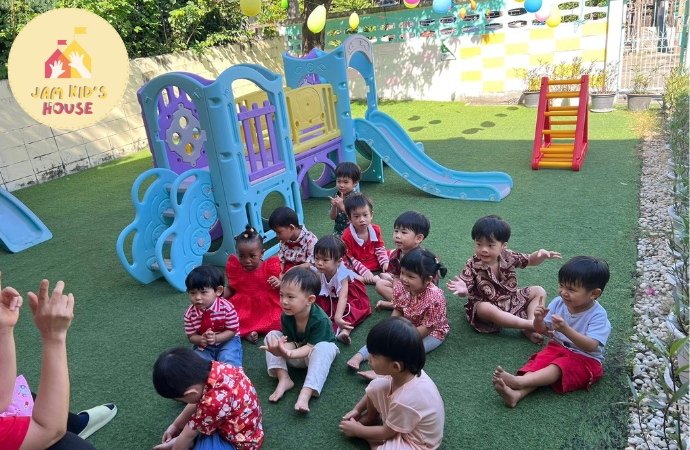
Our approach centres on gentle routines, meaningful interactions, and play-based learning that gives children real reasons to communicate. Whether it’s through shared play, daily conversations, songs, or simple back-and-forth moments, children learn to use language because it helps them connect with others.
Many of the principles we use in our nursery can be easily applied at home—and they don’t require special tools or structured lessons. Consistent, warm interaction is far more powerful than any worksheet or app.
A gentle reminder before we begin
Every child’s path to speech is unique. Some children speak early and clearly, while others take more time and then progress quickly. Some children are talkative at home but quiet in group settings. Others understand far more than they can express. All of these patterns can fall within healthy development.The purpose of this study is not to create worry, but to offer clarity, reassurance, and practical guidance—so you can support your child’s communication with confidence and trust in their individual journey.
Speech and language development does not begin with words. It begins from the very first days of life, long before a child can consciously speak. Understanding this is often reassuring for parents, because it shifts the focus away from “How many words should my child be saying?” and toward “How is my child learning to communicate?”
From birth to age three, children move through a series of overlapping stages. These stages are not rigid steps, and children do not progress through them in exactly the same way or at the same pace. What matters most is that development continues forward, supported by interaction, emotional security, and meaningful experiences.
Throughout this section, the aim is not to create a checklist, but to help you understand why children develop communication skills the way they do—and what is typically happening beneath the surface at each stage.
Speech vs. language: an important distinction
Before looking at ages, it’s helpful to understand the difference between speech and language, as the two are often confused.
- Language is about understanding and meaning. It includes listening, comprehension, gestures, facial expressions, and eventually vocabulary and grammar.
- Speech is about producing sounds and words clearly using the mouth, lips, tongue, and breath.
A child can have strong language skills (understanding instructions, recognising words, responding appropriately) even if their speech is still limited. In fact, this is very common in the early years and especially in bilingual environments.
In the first months of life, babies are not “silent learners.” Their brains are working constantly to absorb sound, rhythm, and tone.
At this stage, babies are learning:
- The sound of voices they hear most often
- The rhythm and melody of language
- That communication leads to comfort, care, and connection
You may notice crying, cooing, gurgling, and early vowel-like sounds. These are not random noises—they are the foundation of speech. Babies are experimenting with their voices and learning how it feels to make sound.
What’s most important during this phase is responsive interaction. When a caregiver talks, smiles, responds, or imitates a baby’s sounds, the baby learns that communication is meaningful. This emotional feedback is a key driver of later language development.
s babies grow, their sounds become more complex. Babbling often includes repeated syllables like “ba-ba”, “da-da”, or “ma-ma.” This stage is critical for speech development, even though it may not resemble real words yet.
During this period, children are also:
- Beginning to understand simple words and phrases
- Responding to their name
- Using gestures such as pointing, reaching, or waving
- Paying close attention to facial expressions and tone
Many parents worry if their child isn’t saying recognisable words by their first birthday. However, understanding language usually develops before spoken language, and a child who follows simple instructions or responds appropriately is showing strong early language skills.
Between one and two years old, many children begin using their first meaningful words. These may be imperfect or inconsistent, and that’s completely normal.
At this stage, children are learning:
- That words represent people, objects, and actions
- How to combine sounds with intention
- That communication helps them get needs met
Vocabulary growth can be slow at first and then suddenly accelerate. Some children say a few words for many months and then experience a rapid “language burst.” Others add words steadily over time.
It’s also common for children to understand far more than they can say. A toddler who follows instructions, points to named objects, or reacts correctly to questions is often developing well, even if spoken words are limited.
From age two to three, children usually begin combining words into short phrases and sentences. Speech becomes clearer, though not all sounds will be pronounced correctly yet.
During this stage, children are developing:
- Sentence structure
- Early grammar
- The ability to express ideas, feelings, and choices
- More complex understanding of instructions and conversations
Speech clarity continues to improve, but it is normal for unfamiliar adults to have difficulty understanding some words. Communication at this age is still very much supported by gestures, tone, and context.
Why development looks different for every child
One of the most important things to understand is that language development is not linear. Children may move forward quickly, plateau for a while, and then surge again. Personality, environment, emotional security, and daily interaction all play a role.
From hands-on experience in the nursery setting, we often see children who:
- Speak little at first but observe carefully
- Use gestures and understanding long before words
- Become more verbal once they feel confident and secure
None of these patterns automatically signal a problem.
A practical takeaway for parents for speech and language development progress from birth to age 3
Language development from birth to age three is about far more than words. It is about connection, understanding, and meaningful interaction. When children feel heard, responded to, and emotionally safe, speech tends to follow naturally.
At this stage, the goal is not to rush development, but to support it gently and consistently, trusting that each child’s timeline is unique.
Next, we’ll look more closely at the role parents and caregivers play in shaping early communication—and how small, everyday interactions have a powerful impact.
When it comes to early speech and language development, parents and caregivers play the most influential role—not because they need to teach language, but because they are the child’s primary source of connection, safety, and communication. Language grows out of relationships, and children learn to speak because they are spoken with, not spoken at.
From birth through the toddler years, children are constantly observing how communication works. They watch facial expressions, listen to tone, notice pauses, and learn that sounds and gestures have meaning. Every response they receive from an adult—whether it’s a smile, a word, or simple eye contact—helps shape their understanding of how language works.
One of the most common misconceptions is that children learn to speak through formal teaching. In reality, young children learn language best through responsive interaction.
This means:
- When a child makes a sound, an adult responds
- When a child points or gestures, an adult labels or acknowledges it
- When a child attempts a word, the adult listens and responds without correction or pressure
These back-and-forth exchanges teach children that communication is a two-way process. Over time, this understanding becomes the foundation for words, sentences, and conversation.
In both home and nursery environments, children who receive consistent responses to their attempts at communication tend to develop confidence in using language. They learn that their voice matters.
Children don’t need simplified or artificial language lessons. They benefit most from hearing real, meaningful language used naturally throughout the day.
This includes:
- Narrating everyday activities (“We’re washing your hands now”)
- Responding to what a child is looking at or interested in
- Describing actions, emotions, and objects in simple, clear terms
- Allowing pauses so the child can respond, even if that response is nonverbal
These moments don’t need to be long or perfectly structured. What matters is that communication feels natural and connected, not forced or instructional.
Speech development is closely tied to emotional development. Children are far more likely to attempt communication when they feel safe, relaxed, and understood.
When children experience:
- Predictable responses from adults
- Gentle encouragement rather than correction
- Acceptance of imperfect speech
- Time to express themselves without being rushed
they begin to associate communication with comfort and success.
In nursery settings, we often see children who speak very little at first, especially in new environments. Once they feel emotionally secure and build trusting relationships, speech often emerges naturally. The same principle applies at home.
Language development doesn’t require special materials or activities. Some of the most effective opportunities happen during everyday routines, such as:
- Mealtimes
- Bath time
- Getting dressed
- Outdoor play
- Bedtime routines
These moments are predictable, repeated, and meaningful to children. Because they happen daily, children begin to associate words and phrases with actions and outcomes, strengthening comprehension and vocabulary over time.
Simple repetition within routines helps children feel confident and supports understanding long before spoken language catches up.
Why consistency matters more than perfection
Parents often worry about whether they are “doing enough” or using the “right techniques.” In reality, consistency is far more important than perfection.
A child benefits more from:
- Regular, warm interaction
- Being listened to attentively
- Feeling encouraged to communicate
than from occasional structured activities or correction-focused approaches.
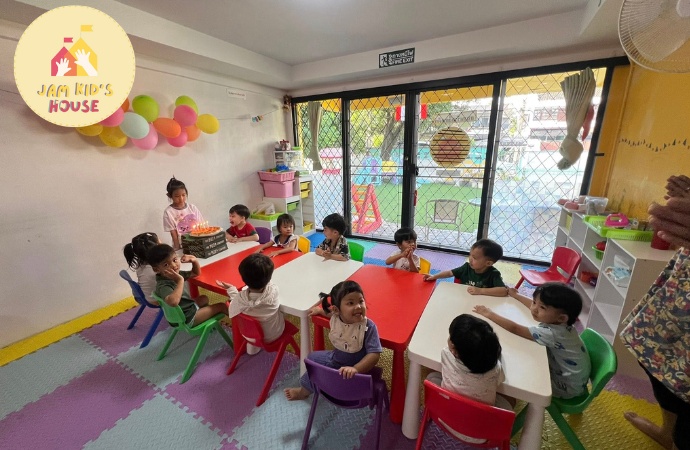
From practical experience working with young children, it’s clear that language flourishes when adults focus on connection first. When communication feels enjoyable and safe, children are far more motivated to use it.
A practical takeaway for parents and caregivers
You don’t need to turn daily life into a lesson plan. By talking, listening, responding, and sharing attention with your child, you are already supporting speech development in the most effective way possible.
The role of parents and caregivers is not to push language forward, but to create an environment where communication feels natural, meaningful, and rewarding.
Young children learn to speak because communication does something for them—it helps them connect, express curiosity, solve small problems, and share experiences. Play, routine, and environment are the contexts that make communication meaningful. When these elements work together, language develops naturally and with far less effort than many parents expect.
Rather than seeing speech as a skill to be trained, it’s more helpful to see it as something that emerges when children are engaged, relaxed, and emotionally secure.
Why play is essential for language development
Play is not a break from learning; it is one of the most important ways young children learn to communicate. During play, children are motivated to interact, experiment, and express themselves—often without realising they are practicing language.
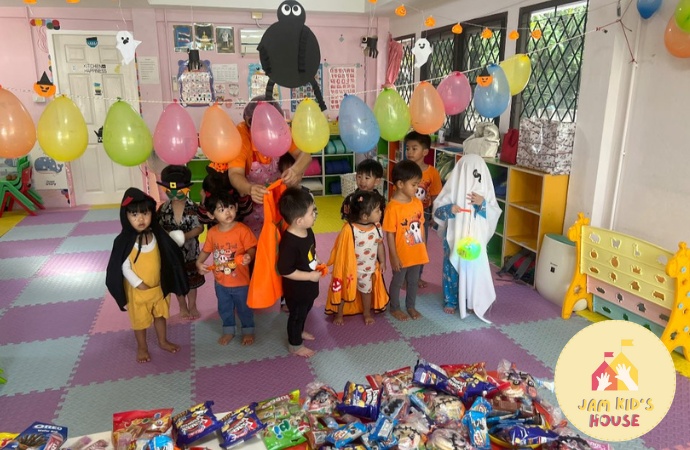
Through play, children:
- Hear and use new words in context
- Learn turn-taking and back-and-forth interaction
- Practise expressing needs, ideas, and emotions
- Begin to understand storytelling and sequencing
Different types of play support language in different ways:
- Sensory play (water, sand, textures) encourages descriptive language and exploration
- Pretend play helps children practise conversation, roles, and imagination
- Music and singing build rhythm, memory, and sound awareness
- Shared book time supports listening, comprehension, and vocabulary
What matters most is not the activity itself, but that an adult is present, engaged, and responsive—following the child’s lead and responding to their interests.
Routine is often overlooked as a language tool, but it plays a powerful role in early communication. Predictable routines help children understand what words mean before they are able to say them.
When the same words are used during the same daily activities—such as getting dressed, eating meals, or preparing for sleep—children begin to associate language with actions and outcomes. This builds comprehension quietly and steadily.
Routine helps children:
- Anticipate what comes next
- Feel safe and emotionally regulated
- Understand repeated language patterns
- Build confidence in their environment
Children who feel secure are more likely to attempt communication. This is why speech often develops more smoothly in environments where routines are calm, consistent, and predictable.
The environment a child spends time in can either support or hinder communication. A language-supportive environment doesn’t need to be loud, busy, or overstimulating. In fact, too much noise or visual distraction can make it harder for young children to process language.
Supportive environments tend to be:
- Calm and organised
- Emotionally warm and responsive
- Rich in meaningful conversation rather than constant background noise
- Focused on interaction rather than passive listening
Children learn language best when adults slow down, speak clearly, and give them time to process and respond. Constant background audio (such as television) may expose children to words, but it does not replace real interaction, eye contact, or shared attention.
Many parents assume that simply exposing children to language—through music, videos, or educational programs—will speed up speech development. However, exposure alone is far less effective than active engagement.
Language grows when:
- A child makes a sound or gesture and receives a response
- An adult notices what the child is focused on and comments on it
- Communication feels like a shared experience
Children don’t learn to speak by hearing words in isolation; they learn by seeing how words connect to people, actions, and emotions.
Practical insight from early learning environments
In nursery settings, it becomes clear how powerful play and routine are when they are intentionally combined. Children often become more verbal when:
- They know what to expect in their day
- Activities are playful rather than pressured
- Adults consistently respond to their attempts to communicate
Even children who are quiet at first frequently begin using more language once they feel comfortable in their environment and engaged in play they enjoy. This reinforces the idea that speech is closely linked to emotional safety and motivation—not just ability.
A practical takeaway for parents
You don’t need to create complex activities to support speech. By providing time to play, maintaining predictable routines, and creating a calm, responsive environment, you are giving your child the conditions they need to communicate.
Language develops best when children are free to explore, feel understood, and enjoy meaningful moments with the people around them.
Yes—variation in when children begin to speak is not only normal, it’s expected. One of the most common sources of anxiety for parents is comparing their child’s speech to that of other children the same age. While age-based milestones can be helpful as a general guide, they do not capture the wide range of healthy development that exists in the first three years of life.
What matters most is not how early a child speaks, but whether their communication skills are continuing to develop in meaningful ways.
Understanding “late talking” versus delayed development
A child who speaks later than peers is not automatically experiencing a delay. Many children who use fewer spoken words early on are still developing strong language foundations beneath the surface.
A “late talker” often:
- Understands far more than they can say
- Uses gestures, pointing, facial expressions, or sounds to communicate
- Engages socially and responds to interaction
- Shows curiosity and interest in people and their surroundings
In these cases, spoken language may simply emerge later, sometimes quite suddenly. This is different from situations where a child struggles with understanding language, social connection, or interaction—areas that deserve closer observation.
Why some children speak later
There are many reasons a child may begin speaking later than others, and most are not cause for concern. Common factors include:
Some children are naturally more observant and cautious. They may spend longer listening and watching before attempting speech. These children are often taking in a great deal of information before they feel confident enough to use words.
Children learn in different ways. Some learn through doing, some through watching, and some through listening. A child who is deeply focused on physical or sensory exploration may temporarily prioritise other skills over spoken language.
Children with older siblings often rely on gestures or others speaking for them. They may not feel the same urgency to use words early on, even though understanding is strong.
Children with older siblings often rely on gestures or others speaking for them. They may not feel the same urgency to use words early on, even though understanding is strong.
Understanding versus speaking: a key distinction
One of the most important indicators of healthy language development is comprehension. A child who:
- Follows instructions
- Responds to their name
- Understands routines
- Reacts appropriately to questions or requests
is showing strong language skills, even if spoken words are limited.
In practice, many children understand language well before they are able or willing to express it verbally. Speech often catches up once confidence, coordination, and motivation align.
Understanding versus speaking: a key distinction
One of the most important indicators of healthy language development is comprehension. A child who:
- Follows instructions
- Responds to their name
- Understands routines
- Reacts appropriately to questions or requests
is showing strong language skills, even if spoken words are limited.
In practice, many children understand language well before they are able or willing to express it verbally. Speech often catches up once confidence, coordination, and motivation align.
Quiet children and situational speech
Some children speak freely at home but remain quiet in group settings, while others may do the opposite. This can be influenced by:
- Comfort level
- Sensory sensitivity
- Personality
- Familiarity with the environment
Silence in certain situations does not necessarily indicate a language issue. Children often need time to feel emotionally secure before expressing themselves verbally, especially in new or stimulating environments.
From hands-on nursery experience, it’s not unusual to see children who speak very little at first and then gradually become more verbal as trust and familiarity grow.
When “late” is still within the range of normal
It’s important to recognise that language development does not follow a strict schedule. Some children begin speaking clearly and confidently before age two, while others progress more gradually and still develop strong communication skills.
What’s more important than word count is:
- Progress over time
- Willingness to communicate in some form
- Engagement with people and surroundings
A steady pattern of development—even if slower—is often reassuring.
A practical takeaway for parents
If your child is speaking less than others their age, it doesn’t automatically mean something is wrong. Many children need more time, the right environment, and emotional readiness before speech fully emerges.
Observation, patience, and supportive interaction often go a long way. The key is to focus on how your child communicates overall, not just how many words they use.
In the next section, we’ll look at when parents should be concerned, and when seeking additional support may be helpful—always with clarity and reassurance in mind.
For many parents, knowing when to simply observe and when to take action can feel confusing. It’s natural to want reassurance that your child is developing well, while also not wanting to overlook something that might need extra support. This balance—between patience and awareness—is an important part of parenting in the early years.
The purpose of this section is not to alarm, but to offer clarity. Early support, when needed, is a positive and proactive step. It does not mean something has “gone wrong,” nor does it define a child’s future.
Understanding the difference between variation and concern
Children develop speech at different rates, but development generally moves forward in observable ways. A child may be slow to speak, but still show progress through understanding, interaction, and communication attempts.
It may be worth seeking guidance if a child:
- Shows little or no response to sounds or voices
- Rarely makes eye contact or engages socially
- Does not attempt to communicate through sounds, gestures, or expressions
- Has difficulty understanding simple, familiar instructions
- Appears frustrated but cannot communicate needs in any way
These signs are not diagnoses—they are indicators that closer observation or professional input could be helpful.
Age-related indicators (without rigid milestones)
Rather than focusing on exact word counts, it’s often more useful to observe overall communication patterns at different ages:
Some use of gestures, response to name, interest in sounds or voices.
Attempts to communicate needs, understanding familiar words or routines.
Growing interest in interaction, some word use or sound combinations, increasing understanding.
Combining words, clearer intent to communicate, engagement in conversation-like exchanges.
A child does not need to meet every expectation exactly on time, but development should feel alive—curious, responsive, and gradually expanding.
Speech clarity vs. language understanding
It’s important to separate how clearly a child speaks from how well they understand language.
Many young children:
- Mispronounce sounds
- Leave off parts of words
- Speak clearly to familiar caregivers but not others
These patterns are often part of normal speech development.
Greater concern arises when a child:
- Struggles to understand what is being said
- Rarely responds to spoken language
- Seems disconnected from communication altogether
Understanding is often a stronger indicator of development than pronunciation in the early years.
Bilingual environments and support considerations
In bilingual households, children may show different expressive patterns. They might:
- Use fewer words in each language
- Mix languages
- Speak later than peers in monolingual homes
These patterns are generally normal. However, if a child shows difficulty understanding both languages or avoids communication altogether, it may be worth seeking professional advice.
Early support can be tailored to bilingual development and does not require removing one language from the child’s environment.
Why early support is not a negative step
There is a common misconception that seeking help means something is seriously wrong. In reality, early guidance often:
- Reduces stress for both parents and children
- Provides practical strategies for home and daily routines
- Helps identify whether observation alone is sufficient
- Supports confidence in both the child and caregivers
From real-world experience in early childhood settings, children who receive timely, gentle support often make strong progress—especially when guidance is combined with consistent, nurturing interaction at home.
Observation and trust remain important
Parents know their children best. If something feels concerning, that instinct is worth listening to. At the same time, it’s equally important to trust that development unfolds differently for each child.
Language growth is shaped by:
- Emotional safety
- Opportunity to interact
- Consistent relationships
- Time
Support, when needed, should feel empowering—not frightening.
A practical takeaway for parents
If your child is curious, engaged, and communicating in their own way—even without many words—that is often a healthy sign. If progress feels stalled, or communication seems limited across situations, seeking advice can bring clarity and reassurance.
The goal is not to rush development, but to ensure your child has the support they need to find their voice—at the pace that’s right for them.